2026 Top Empty Paint Can Components Suppliers?
The 2026 search for reliable Empty Paint Can Components suppliers begins with market evidence, not attractive catalogs. Grand View Research valued the global paints and coatings market at approximately USD 206.56 billion in 2023. Its report expects continued growth through 2030, supported by construction, automotive production, and industrial maintenance. More coatings require dependable cans, lids, handles, rings, gaskets, and interior coatings.
Packaging performance is becoming more measurable. Smithers’ The Future of Metal Packaging to 2028 highlights material efficiency, recycling, lightweighting, and supply-chain resilience as major purchasing considerations. Meanwhile, Metal Packaging Europe reports that steel packaging achieved an 80% recycling rate in Europe in 2022. These figures matter. A can may look simple, but a weak seam or poorly fitted lid can cause leakage, contamination, and expensive product returns.
As metal-packaging specialist Anders Linde has stated, “Steel packaging is a permanent material in a circular economy.” His observation is useful, although it should not replace supplier verification. Buyers still need factory audits, dimensional testing, coating compatibility checks, and documented quality systems. Certifications alone can mislead.
This guide compares the 2026 leading suppliers through practical criteria: component tolerances, tinplate or aluminum grades, closure reliability, corrosion resistance, customization, minimum order quantities, and delivery performance. Samples should be tested with actual paint formulations. That step is often missed.
No ranking is perfect. Regional freight costs, volatile steel prices, and changing environmental requirements can alter the final choice. The strongest supplier is not always the largest. It is the one that consistently protects the paint inside the can.
What Are Empty Paint Can Components?
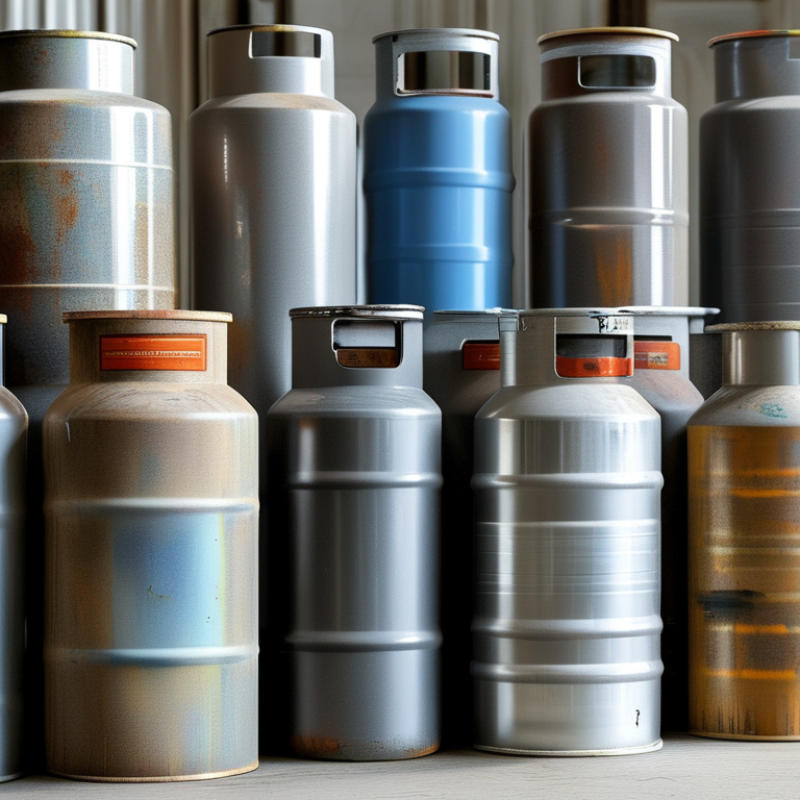
Empty paint can components are the separate parts used to build a safe, functional container before filling. The main body usually uses coated steel or other suitable metal. It provides strength during stacking, transport, and storage. The lid creates a tight closure and may include a removable plug for controlled pouring. A metal rim connects the lid and body securely. Small parts matter.
A handle improves carrying, especially for larger cans. Wire handles need balanced attachment points and comfortable gripping space. Many containers also use an interior coating to reduce corrosion and limit contact between paint and metal. An exterior finish protects the surface and supports clear labeling. Some designs include a gasket or sealing compound around the lid. This helps reduce leakage, but seal performance depends on application quality.
When evaluating empty paint can components suppliers in 2026, buyers should inspect dimensions, material thickness, coating consistency, and closure fit. A sample can should survive repeated opening without a distorted rim. Check the handle under a realistic load, not only in a catalog photograph. Production records, inspection reports, and batch traceability improve reliability. Suppliers should explain tolerances clearly. I have found that specifications can look complete while omitting lid fit details. That gap deserves attention. A practical review also considers clean edges, stacking stability, and compatibility with filling equipment. Perfect performance is rarely guaranteed, so documented testing and honest communication remain essential.
Which Components Define Paint Can Quality and Performance?
Paint can quality begins with its components, not the label. The steel body must resist denting during stacking and transport. Its thickness, seam design, and internal coating control strength and corrosion resistance. A weak seam can leak before the paint reaches the jobsite. That risk is easy to underestimate.
The lid and closure decide whether the can stays airtight. A reliable curl, plug seal, or gasket should prevent skin formation and accidental spills. ASTM D4169 testing evaluates packaging under repeated distribution hazards, including vibration, compression, and impact. Suppliers should share test conditions, not only pass statements. Small detail. Big difference.
The handle also affects performance. A balanced wire handle should carry a full can without cutting into the hand. For reference, Eurostat reported a 75.9% recycling rate for metal packaging in the European Union in 2022. Recyclable steel therefore supports both recovery and structural performance, provided coatings and mixed materials remain manageable. The World Steel Association has also reported roughly 680 million tonnes of steel recycled globally each year, showing the value of material selection. Still, recycled content alone does not prove quality. A supplier should document coating adhesion, flange accuracy, lid fit, and leak results. In practice, one overlooked burr can damage a gasket. Human inspection remains necessary, although it is not perfectly consistent.
2026 Top Empty Paint Can Components Suppliers: Quality and Performance Factors
The chart presents a practical supplier-evaluation weighting for empty paint cans. Steel body strength and thickness, internal coating protection, double-seam integrity, lid fit, handle attachment, and dimensional consistency are the main component-level factors affecting durability, leakage resistance, corrosion protection, filling-line performance, and user safety.
How to Evaluate Empty Paint Can Component Suppliers in 2026
2026 Top Empty Paint Can Components Suppliers?
How to Evaluate Empty Paint Can Component Suppliers in 2026
Evaluating an empty paint can component supplier requires more than comparing unit prices. Review the full component range, including lids, handles, rings, gaskets, and closures. Check dimensional drawings, material specifications, and production tolerances. Small defects matter. A lid that fits poorly can cause leakage, denting, or difficult stacking during transport.
Ask for recent sample batches, not only presentation samples. Inspect seam quality, coating uniformity, handle strength, and closure performance under repeated use. Request test records for corrosion resistance, seal integrity, and load capacity. Reliable suppliers should explain their testing methods clearly. They should also provide lot numbers and traceability documents. Samples are not enough.
Factory experience deserves careful attention. Review equipment maintenance, quality checkpoints, worker training, and corrective-action records. A capable supplier can describe how defects are isolated before shipment. Visit the production site when practical, or arrange a documented remote audit. Assess communication speed as well. Delayed answers often become delayed production. However, communication alone proves little. Verify claims against records, inspection results, and customer references from relevant markets.
Sustainability should be evaluated with evidence. Ask about recycled content, material reduction, coating choices, and waste controls. Confirm that environmental statements match available documentation and applicable requirements. A scorecard helps compare suppliers, but no scorecard is perfect. Weight safety, consistency, and traceability more heavily than impressive brochures. Leave room for judgment. Supplier performance can change after volume increases, tooling revisions, or staff turnover. Recheck critical controls before signing a long-term agreement.
What Manufacturing and Sustainability Standards Should Suppliers Meet?
2026 Top Empty Paint Can Components Suppliers: What Manufacturing and Sustainability Standards Should Suppliers Meet?
Reliable suppliers should prove how lids, handles, rings, and closures are made. ISO 9001 certification supports documented quality control, traceability, and corrective action. Every steel batch should have a clear material certificate. Critical dimensions need recorded inspections, not informal checks.
Manufacturing emissions also matter. The World Steel Association reports that steel production creates about 7–9% of global carbon dioxide emissions. Suppliers should therefore measure energy use, scrap rates, and process emissions. ISO 14001 supports environmental management, while ISO 50001 can improve energy performance. Closed-loop steel scrap systems are valuable. They reduce waste and limit virgin material demand. Still, recycled content claims need independent evidence.
Sustainability claims should follow life-cycle methods under ISO 14040 and ISO 14044. Suppliers should disclose transport impacts, coating chemistry, and end-of-life recyclability. The World Bank’s What a Waste 2.0 report projected municipal waste could reach 3.40 billion tonnes annually by 2050. This makes recyclable steel components increasingly important. Packaging recyclability should also align with recognized regional standards, such as EN 13430 where applicable. Worker protection cannot be overlooked. ISO 45001, ventilation controls, and safe handling procedures should be verified through audits. A perfect supplier scorecard is unrealistic. I would still question any supplier showing impressive carbon figures without product-level data. On-site audits often reveal the missing details.