Choosing the right Metal Packing Components requires more than comparing catalog dimensions or advertised surface area. The decision affects pressure drop, mass-transfer efficiency, liquid distribution, corrosion resistance, maintenance, and operating cost. A component that performs well in a laboratory column may behave differently inside a tall industrial tower.
Henry Z. Kister, a respected distillation engineer and author, stated, “Distillation is the most widely used separation process in the chemical process industries.” His observation highlights why packing selection deserves careful engineering attention. Metal packing components support the vapor-liquid contact that makes this process effective. Their geometry, material grade, thickness, and surface finish can change performance significantly.
Start with the operating details. Record vapor velocity, liquid load, temperature, pressure, fluid viscosity, and chemical composition. Then examine whether the application needs random packing, structured packing, support grids, distributors, or demisters. Stainless steel may suit many services, but aggressive chlorides or acids can demand a more resistant alloy. The wrong choice may create corrosion, flooding, channeling, or premature shutdowns.
There is no universal best option. That is the uncomfortable part. Higher surface area can improve contact, yet it may also increase fouling sensitivity or pressure drop. A thinner component may reduce weight, but it can be less tolerant of installation damage. Supplier data should be checked against field experience, inspection records, and realistic hydraulic calculations.
This guide explains how to compare Metal Packing Components with greater confidence. It also questions common assumptions, because reliable selection depends on actual process conditions, not attractive specifications alone.
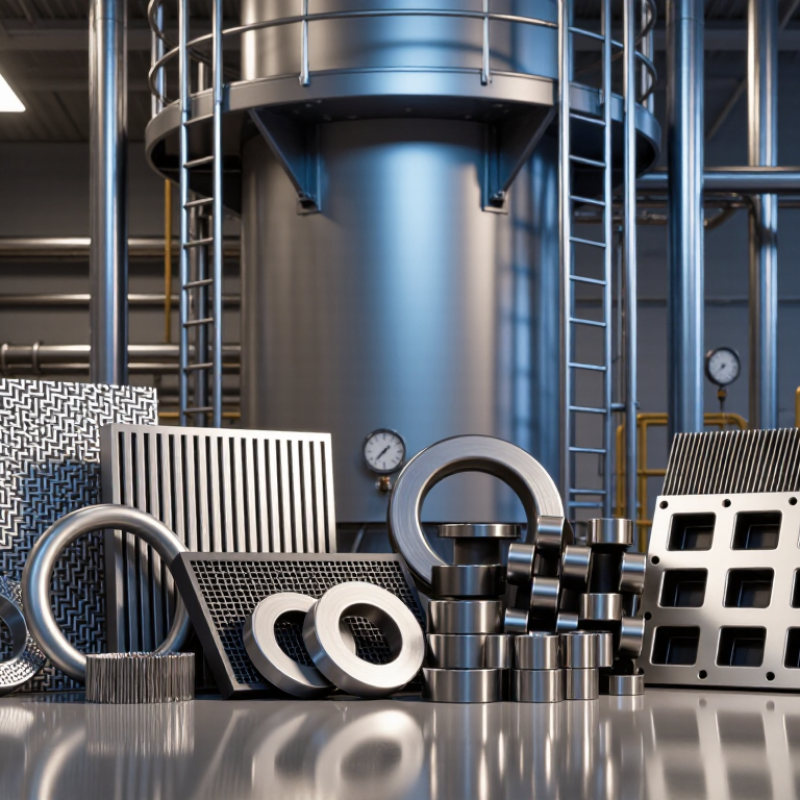
Metal packing components improve contact between gases and liquids inside process towers. They are commonly used in distillation, absorption, stripping, and gas scrubbing applications. Their main forms include structured sheets, wire mesh, and random metal pieces. Each design creates a different balance between surface area, pressure drop, and liquid distribution.
The operating conditions should guide the selection. Stainless steel suits many heat and corrosion environments. Carbon steel may work well in less aggressive services. Nickel-based alloys can be considered for demanding chemical conditions. Temperature, fluid viscosity, vapor load, and contamination risk also matter. A packing with high surface area may improve efficiency, but it can clog when solids or sticky materials enter the tower.
Practical inspection remains important. Check sheet thickness, mesh density, surface finish, and dimensional consistency. Poorly formed edges can disturb liquid flow. I have found that installation quality sometimes affects performance more than the catalog rating. Level the bed carefully, protect fragile components, and confirm that liquid distributors cover the full tower area. Ask for material certificates, production records, and pressure-drop data when available. Testing under actual conditions is more reliable than relying on one theoretical value. No choice is perfect. A design may still need adjustment after startup.
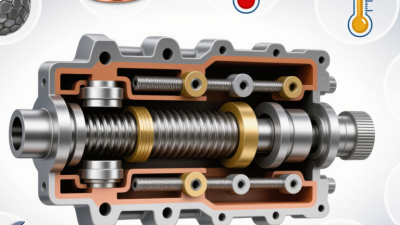
Choosing metal packing starts with process data, not catalog dimensions. Record vapor and liquid rates, operating pressure, temperature, and composition. Also note startup, shutdown, foaming, vibration, and unexpected surges. A packing that performs well at steady state may flood during a cold startup. That detail is often missed.
For corrosive service, compare alloy compatibility with chlorides, acids, alkalis, and oxygen exposure. Temperature alone does not predict corrosion. A hot, dry stream may be manageable, while cooler condensate attacks crevices quickly. Confirm material data with corrosion specialists and actual plant history. If history is incomplete, keep the assumption visible. This is less elegant, but safer.
Hydraulic loading sets the practical limit. Check pressure drop, liquid distribution, allowable fouling, and required separation efficiency. Use vessel diameter, bed height, nozzle layout, and support details in the review. Metal thickness and surface texture affect strength, wetting, and cleaning behavior. I would request a small margin for rate changes, although excessive margin can reduce efficiency. That trade-off deserves testing. Before approval, compare design calculations with operating measurements from a similar duty. Even then, inspection access matters. A component can be chemically suitable yet impossible to examine after installation.
| Process Requirement | Recommended Metal Packing Component | Typical Application | Preferred Material | Typical Operating Range | Key Selection Data | Advantages | Limitations and Checks |
|---|---|---|---|---|---|---|---|
| High separation efficiency with limited column height | Structured packing with corrugated metal sheets | Distillation, absorption and stripping where low theoretical stages per unit height are required | 304L or 316L stainless steel; nickel alloys for severe chemical service | Temperature: approximately −50 to 250°C Pressure drop: commonly 0.3–1.5 mbar/m |
Specific surface area commonly 125–500 m²/m³; liquid and vapor load, channeling risk, and required HETP | High mass-transfer efficiency, low pressure drop and relatively low liquid holdup | Requires good liquid distribution; sensitive to fouling, solids and maldistribution |
| General-purpose gas–liquid contact with mechanical strength | Metal Pall-type rings | Absorption, stripping, quench towers and moderate-duty distillation | Carbon steel for non-corrosive service; 304L or 316L stainless steel for corrosive or hygienic service | Temperature: approximately −20 to 400°C Pressure drop: commonly 0.5–2.0 mbar/m |
Nominal sizes commonly 25–90 mm; choose smaller sizes for efficiency and larger sizes for lower pressure drop | Open geometry, good wetting, high mechanical strength and lower plugging tendency than dense random packing | Random packing installation must be controlled to prevent segregation and wall effects |
| Low pressure drop and high throughput | Metal saddle-shaped random packing | Large-diameter absorbers, scrubbers and stripping columns with high gas or vapor rates | 304L or 316L stainless steel; aluminum for lightweight, non-corrosive applications | Temperature: approximately −50 to 300°C Pressure drop: commonly 0.4–1.5 mbar/m |
Open void fraction often above 90%; evaluate flooding velocity, liquid distribution and allowable entrainment | High voidage, low pressure drop and good resistance to compression during loading | Usually provides lower efficiency than fine structured packing at the same height |
| High liquid holdup and stable wetting at low liquid rates | Metal wire-mesh packing | Vacuum distillation, fine fractionation and systems requiring high efficiency at low pressure | 304L or 316L stainless steel; nickel alloy for highly corrosive service | Temperature: approximately −50 to 250°C Pressure drop: commonly 0.2–1.0 mbar/m |
Fine mesh, surface tension, liquid viscosity and vapor load are critical; vacuum design requires very low pressure drop | Very high separation efficiency and excellent performance in vacuum service | Prone to fouling and damage from solids; requires clean feed and careful liquid distribution |
| Corrosive acid or chloride-containing service | Metal structured or random packing in corrosion-resistant alloy | Acid gas absorption, halogen service and chemical processing with aggressive contaminants | 316L stainless steel for moderate chloride exposure; nickel alloys or titanium when corrosion testing supports their use | Temperature: process-specific Design must use corrosion allowance and verified compatibility data |
Check acid concentration, chloride level, water content, temperature, oxygen availability and galvanic contact | Maintains packing geometry and strength when the selected alloy is compatible with the process fluid | Material compatibility cannot be selected from temperature alone; laboratory or corrosion-engineering review may be required |
| High-temperature, non-corrosive gas service | Metal random rings or corrugated sheet packing | Hot gas cooling, thermal recovery and high-temperature gas scrubbing | Carbon steel for dry, non-corrosive conditions; stainless steel where oxidation or moisture is present | Temperature: approximately 200–600°C, depending on alloy and atmosphere | Evaluate oxidation, thermal expansion, compressive strength, shell temperature and heat-up or cool-down rate | Good dimensional stability and resistance to mechanical shock compared with many non-metallic packings | Carbon steel can oxidize rapidly in hot wet service; verify alloy limits and thermal cycling requirements |
| High solids loading or frequent fouling | Large-size open metal rings or grid-type packing | Dirty-gas scrubbers, wastewater stripping and services containing suspended solids | 316L stainless steel; coated carbon steel where coating integrity is proven | Temperature: approximately 0–200°C Pressure drop: commonly 0.5–2.5 mbar/m |
Use large openings, high voidage and accessible support grids; assess cleaning method and solids size | Lower plugging risk, easier flushing and good resistance to hydraulic restriction | Lower interfacial area can reduce mass-transfer efficiency; distributors and wash systems remain essential |
| Hygienic or high-purity processing | Smooth-surface structured stainless-steel packing | Food, pharmaceutical and high-purity solvent separation where cleanability is important | 316L stainless steel with suitable surface finish and traceable fabrication | Temperature: approximately −20 to 180°C Operating limits depend on cleaning chemicals and sterilization cycle |
Surface finish, weld quality, drainability, clean-in-place velocity and compatibility with cleaning agents | Low crevice volume, good cleanability and repeatable hydraulic performance | Confirm that passivation, fabrication tolerances and cleaning procedures meet the applicable process standard |
| Pressure-sensitive vacuum operation | High-efficiency wire-mesh or fine corrugated structured packing | Vacuum distillation of heat-sensitive products and high-boiling mixtures | 304L or 316L stainless steel; specialty alloys for corrosive feed components | Absolute pressure: commonly 1–100 mbar Pressure drop: target as low as practical, often below 1 mbar/m |
Vapor density, surface tension, liquid viscosity, entrainment limit, condenser pressure and distributor performance | Reduces reboiler temperature and pressure-drop losses while providing high stage efficiency | Small operating margin before flooding; feed contamination and poor distribution can sharply reduce performance |
| High mechanical load or transport vibration | Rigid structured packing with reinforced supports | Tall columns, offshore units and installations exposed to vibration or frequent maintenance | 304L or 316L stainless steel; heavier-gauge carbon steel for compatible fluids | Mechanical design is project-specific Support and bed-limit loads must be checked |
Compressive strength, support-grid capacity, bed height, shipping orientation, thermal expansion and seismic or vibration loads | Stable geometry, predictable pressure drop and reduced risk of packing collapse | Higher material usage and installation cost; column internals must be designed as a complete system |
How to Choose the Right Metal Packing Components?
Material selection should begin with the process fluid, temperature, and corrosion risk. Stainless steel suits many wet environments and provides dependable mechanical strength. Carbon steel costs less, but it may deteriorate quickly in acidic or chloride-rich service. Nickel-based alloys handle harsher conditions, though their higher price needs careful justification. I always compare material data with actual operating records, not only supplier tables.
Shape strongly affects packing performance. Rings provide open passages and can limit pressure drop in gas-heavy systems. Saddles often improve liquid spreading across the packing bed. Structured metal packing offers large surface area and controlled contact, but it demands accurate installation. Thin sheets can perform efficiently, yet they may deform under rough handling. Small components increase contact area, while larger shapes resist fouling more effectively. The best choice is rarely obvious.
Performance depends on more than surface area. Check liquid distribution, vapor velocity, bed depth, and flooding margin. A well-designed component should support mass transfer without creating excessive pressure loss. In field inspections, uneven wetting often explains poor results better than the packing material itself. I also examine dents, blocked passages, and corrosion spots after operation. These details are easy to miss. No calculation replaces inspection. A conservative design may reduce capacity, but it can provide more stable operation. Cost comparisons should include replacement labor, cleaning time, and downtime, not just the purchase price.
Choosing metal packing components means testing the service, not simply selecting stainless steel. Compatibility starts with chemistry. Record fluid pH, chloride concentration, temperature, pressure, and cleaning chemicals before ordering. A packing that survives dry gas may pit quickly in hot, wet chloride service. AMPP’s IMPACT study estimated corrosion costs at about $2.5 trillion yearly, or 3.4% of global GDP. That figure supports early material screening, but it does not replace plant-specific evidence.
Durability depends on loading as much as alloy selection. Check compression, vibration, thermal cycling, and shutdown frequency. API 571 identifies erosion, corrosion, and stress corrosion cracking as key equipment damage mechanisms. For atmospheric exposure, ISO 12944 classifies corrosivity from low to very high. The selected metal and coating must match the actual environment. In a reactor or column, inspect contact points, sharp edges, and deposits during planned outages. Photographs and thickness readings often reveal damage before leakage appears.
Maintenance is practical engineering. Use compatible gaskets, fasteners, and support grids; galvanic couples can undermine a sound component. A better decision records inspection intervals, replacement access, and cleaning time beside purchase price. I would challenge one assumption: a thicker part is not automatically more durable. It may trap deposits, increase pressure drop, or hide an unsuitable alloy. Pilot testing remains imperfect, yet a small coupon exposed to real process fluid can prevent an expensive guess.
Selecting metal packing components should begin with process conditions, not the lowest purchase price. A distributor, support grid, hold-down device, or mist eliminator must match liquid load, vapor velocity, temperature, and corrosion exposure.
For example, chloride-rich streams can quickly challenge ordinary stainless steel, especially around welds and stagnant areas. The NACE IMPACT study estimated global corrosion costs at 3.4% of world GDP, showing why material selection deserves serious attention. A small upgrade in alloy quality may prevent tower shutdowns, damaged packing, and repeated replacement labor.
Efficiency also depends on pressure drop and maintenance access. The U.S. Department of Energy’s Industrial Decarbonization Roadmap reports that industry uses about 30% of U.S. energy and creates roughly 25% of its greenhouse-gas emissions.
In a packed tower, an unsuitable support or clogged mist eliminator can increase resistance and raise fan or compressor demand.
Specify open-area ratios, drainage paths, allowable deflection, and inspection clearance before fabrication.
Keep it practical. A removable section can save hours during cleaning.
Purchase price is only one line in the calculation. Compare installed cost, expected service life, spare requirements, and lost production risk.
I would not treat every published efficiency figure as universal; testing conditions often differ from the plant. Ask for drawings, material certificates, load calculations, and verification against recognized engineering standards.
A spreadsheet can still mislead when corrosion allowance or difficult access is ignored.