Leave Your Message
A Lever Lock Pail Lid may look like a small component, but buyers notice its performance at every stage: filling, stacking, transport, and opening. A loose fit can leave residue around the rim. A stiff lever can slow line workers. These details matter in 2026, as packaging teams balance handling efficiency, product protection, and dependable sourcing.
PMMI’s 2024 State of the Industry Report and Smithers’ packaging-market research offer useful context on changing packaging operations and market priorities. Neither report isolates lever-lock pail lids, so buyers should not mistake broad packaging trends for product-specific proof. Instead, compare lid and pail compatibility, closure consistency, material specifications, and performance under realistic handling conditions. Ask suppliers for test methods and documented results. Then check whether those results match your own filling line and distribution route.
Packaging educator Walter Soroka, author of Fundamentals of Packaging Technology, is associated with a practical systems-based approach. A fair paraphrase of that perspective is: assess the complete package, not the lid alone. That distinction is easy to overlook. Buyers should examine lever movement, rim engagement, and how the closed pail behaves after repeated handling. Request samples. Test them with the intended pail, product, and process.
There is no universal best lid. This guide compares leading options by fit, usability, evidence, and purchasing considerations, helping buyers select a Lever Lock Pail Lid with fewer assumptions and clearer specifications.
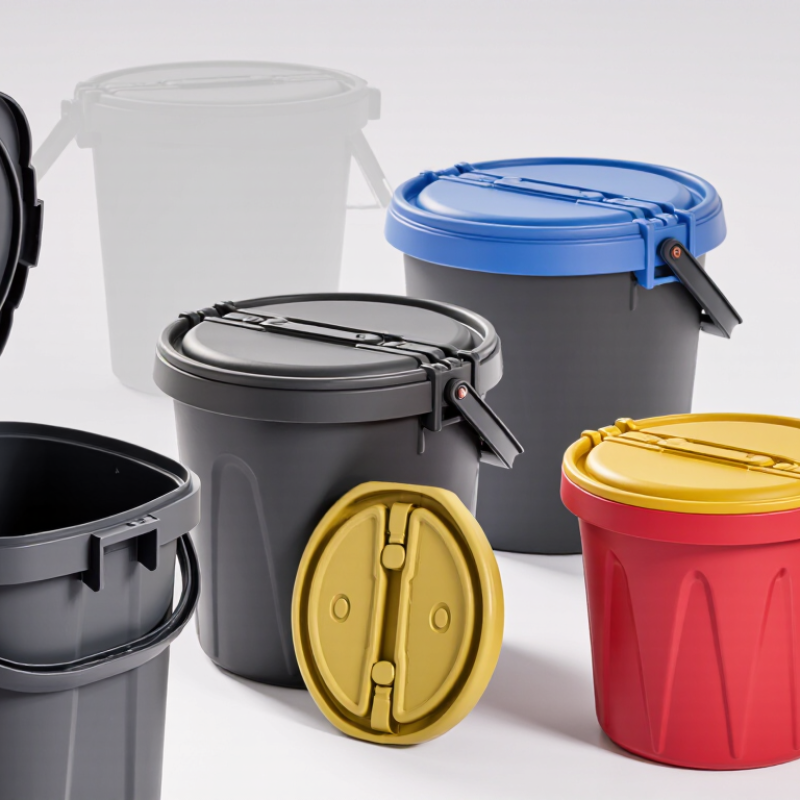
In open-head packaging, a pail has a fully removable top rather than a fixed dispensing opening. A lever-lock lid uses a rigid ring and hinged lever to secure the lid against the pail’s rim. Users can reopen it for inspection or partial use, then reseat it. Simple, but not foolproof.
The U.S. Environmental Protection Agency’s 2018 Advancing Sustainable Materials Management report estimated that containers and packaging made up 82.2 million tons of U.S. municipal solid waste. That represented 28.1% of the total. This is a broad category, not a pail-specific finding. It gives buyers context, not proof that a lever lock reduces waste.
Match the lid to the pail’s diameter, rim profile, fill weight, and contents. Then test closure fit after repeated opening. Check lever movement with gloved hands, and inspect for residue or uneven seating. A snug fit on the bench may change during transport, temperature shifts, or stacking. No single lid suits every duty. Sample testing against the actual fill and handling cycle is worthwhile.
A buyer-focused guide to lever-lock lids used with open-head pails. Specifications and compatibility vary by pail design; confirm the complete closure system with the supplier before ordering.
| Buying Dimension | Definition or Typical Detail | What Buyers Should Check |
|---|---|---|
| Closure type | A removable lid is fitted over the open top of a pail and secured by a circular ring. A lever on the ring tightens or releases the closure. | Confirm that the lid, ring, and pail are designed to work together; similar-looking parts are not necessarily interchangeable. |
| Open-head system | Open-head pails have a removable top, allowing access to the full opening for filling, emptying, and cleaning where appropriate. | Verify the pail’s rim profile, opening diameter, and closure style against the lid-and-ring assembly. |
| Lid and ring material | Depending on the packaging design, lids and locking rings may be made from metal or plastic. Material choice affects weight, corrosion resistance, and application suitability. | Match materials to the contents, handling conditions, storage environment, and applicable packaging requirements. |
| Gasket or sealing element | Some closures use a gasket or sealing compound between the lid and pail rim to support the intended seal. | Check whether a gasket is included, whether it is compatible with the product, and whether it must be replaced after opening. |
| Lever operation | The lever engages the locking ring to secure it around the pail’s rim; releasing the lever allows the ring and lid to be removed. | Review the closure instructions and confirm that operators can fully engage and release the lever using the intended procedure. |
| Capacity and dimensions | Open-head pails are sold in different capacities and dimensions. Lid fit depends on the specific pail opening and rim design, not capacity alone. | Specify the pail model or provide measured opening and rim details when requesting a replacement lid or ring. |
| Product compatibility | Compatibility depends on the pail and closure materials, the contents, and the conditions of use. | Check chemical compatibility and any relevant temperature, storage, or transport conditions before selecting the closure. |
| Leak and tamper expectations | A lever-lock ring is a mechanical closure; its presence alone does not establish a specific leakproof, hermetic, or tamper-evident performance level. | Use a closure specifically designed and tested for the required performance. Confirm whether a separate tamper-evident feature is needed. |
| Regulated or hazardous contents | For regulated transport, the complete packaging configuration may need to meet applicable performance requirements. | Confirm that the exact pail, lid, ring, gasket, and closure procedure are covered by the required approval and instructions. |
| Receiving inspection | Before use, inspect closure components for damage, deformation, contamination, or missing sealing elements. | Reject mismatched or damaged parts, and follow the supplier’s assembly, closure, and inspection guidance. |